
How to Find the Right Weight Distribution Hitch: A Complete Buyer's Guide for 2026
Knowing how to find the right weight distribution hitch is one of the most important decisions you can make before towing a heavy trailer. Consider this: approximately 70% of a vehicle's braking power and 100% of its steering control are concentrated on the front axle, and a heavy trailer tongue load shifts that critical weight rearward, leaving you dangerously understeered and harder to stop. Getting the right weight distribution hitch (WDH) restores that balance and keeps you in control on the road.
Key Takeaways
|
Question |
Quick Answer |
|---|---|
|
When do I need a weight distribution hitch? |
When your trailer's tongue weight exceeds 10-15% of its total loaded weight or when your vehicle's rear sags noticeably during hookup. |
|
What weight capacity do I need? |
Match the hitch's gross trailer weight (GTW) rating to your trailer's loaded weight. Options range from 5,000 lbs to 15,000+ lbs for heavy-duty setups. |
|
Round bar vs. trunnion bar: which is better? |
Round bar hitches are affordable and widely available. Trunnion bar hitches are more compact, easier to adjust, and better suited for heavier loads. |
|
Do I need sway control with a WDH? |
Yes, in most cases. Sway control works alongside weight distribution to prevent dangerous trailer oscillation, especially on highways. |
|
What does a weight distribution hitch cost? |
Entry-level models start around $250-$500. Premium anti-sway systems can exceed $2,400 depending on capacity and features. |
|
Where can I shop for weight distribution hitches in Canada? |
Browse our full trailer weight distribution hitches collection for in-stock options across multiple capacity ranges. |
|
Which brands make reliable WD hitches? |
CURT is one of the most trusted names in the industry, with a full lineup from entry-level round bar systems to the advanced TruTrack 4P platform. |
Why Finding the Right Weight Distribution Hitch Matters More Than You Think
Many drivers underestimate the risk of towing without proper weight distribution. Trailer sway contributes to thousands of preventable crashes annually, with over 50,000 total trailer-involved accidents occurring in the U.S. each year.
A weight distribution hitch works by using spring bars to transfer a portion of the tongue weight from your tow vehicle's rear axle to both the front axle and the trailer axles. The result is a level, controlled setup where your headlights point straight, your brakes work properly, and your steering responds the way it should.
Without one, you risk rear-end sag, reduced braking efficiency, loose steering, and increased trailer sway, all of which become significantly more dangerous at highway speeds or in crosswinds.
Discover the five essential factors to consider when selecting a weight distribution hitch for safer, more stable towing.
Step 1: Know Your Numbers Before You Shop for the Right Weight Distribution Hitch
The single most important step when figuring out how to find the right weight distribution hitch is knowing two numbers: your trailer's Gross Trailer Weight (GTW) and its tongue weight.
GTW is the total loaded weight of your trailer including cargo, fluids, and passengers. Tongue weight is the downward force that the trailer's coupler exerts on your hitch ball, and the ideal range is consistently rated between 10% and 15% of the total loaded trailer weight.
Here is a quick reference to help you understand where you stand:
|
Trailer GTW |
Typical Tongue Weight (10-15%) |
WDH Needed? |
|---|---|---|
|
Under 5,000 lbs |
500 - 750 lbs |
Sometimes (check tow vehicle manual) |
|
5,000 - 8,000 lbs |
500 - 1,200 lbs |
Yes, recommended |
|
8,000 - 12,000 lbs |
800 - 1,800 lbs |
Yes, required |
|
12,000 - 17,000 lbs |
1,200 - 2,550 lbs |
Yes, heavy-duty required |
Always check your tow vehicle's owner manual as well. Many manufacturers specify a minimum tongue weight at which a WDH becomes mandatory, and exceeding that threshold without one can void your warranty.
Did You Know?
Proper load management and weight distribution can reduce a vehicle's rollover risk by up to 30%.
Source: knobhilltowing.com
Step 2: Choose the Right Hitch Type When Finding the Right Weight Distribution Hitch
Once you know your weight numbers, the next step is choosing between the two main hitch designs: round bar and trunnion bar. Each has specific advantages depending on your setup.
Round Bar Weight Distribution Hitches
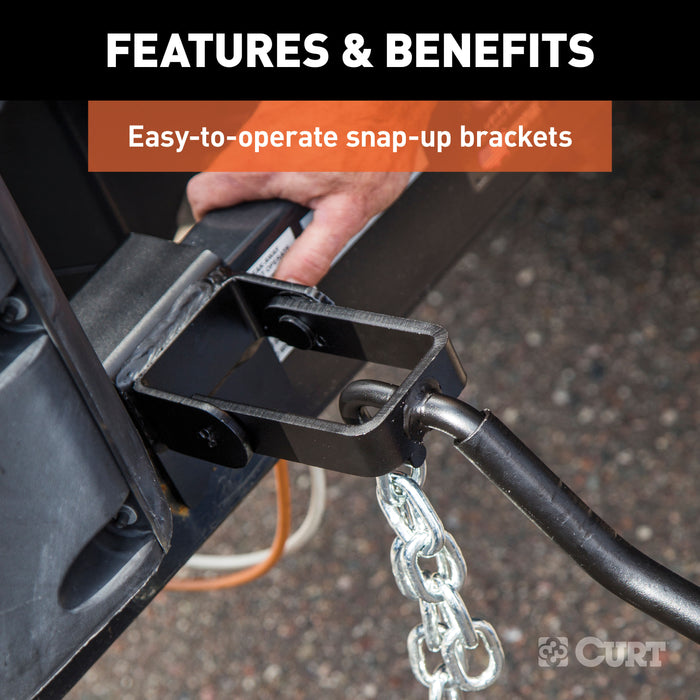
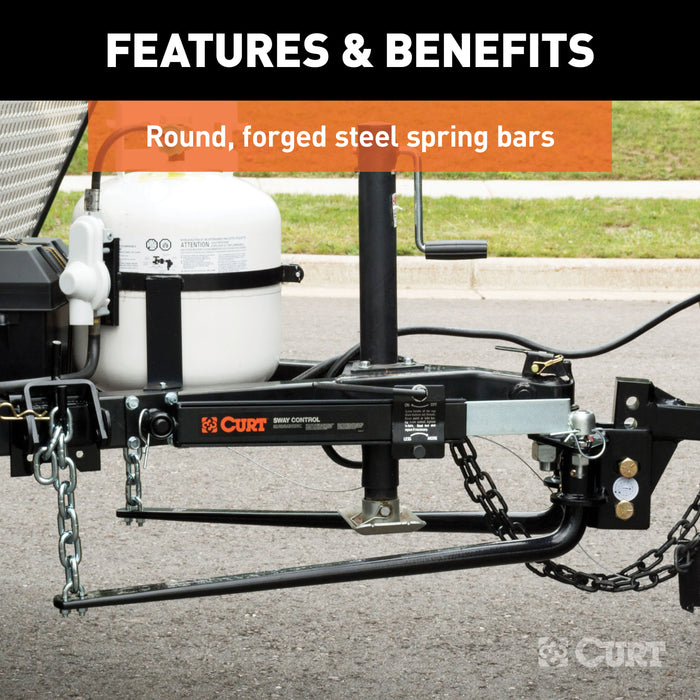
Round bar systems use cylindrical spring bars that hook into the hitch head and lever down to create tension. They are the most common type and are widely compatible with standard ball mounts.
These systems work exceptionally well for trailers in the 5,000 to 12,000 lb GTW range and tend to be more affordable than trunnion designs.
Trunnion Bar Weight Distribution Hitches
Trunnion bar systems use square spring bars that pivot on a trunnion pin inside the hitch head. This design offers a more compact profile, easier installation, and typically handles higher tongue weights more smoothly.
If you are towing heavier loads in the 10,000 to 15,000 lb range, a trunnion bar system is usually the better choice for consistent performance and durability.
Step 3: Understand the Role of Sway Control When Selecting a Weight Distribution Hitch
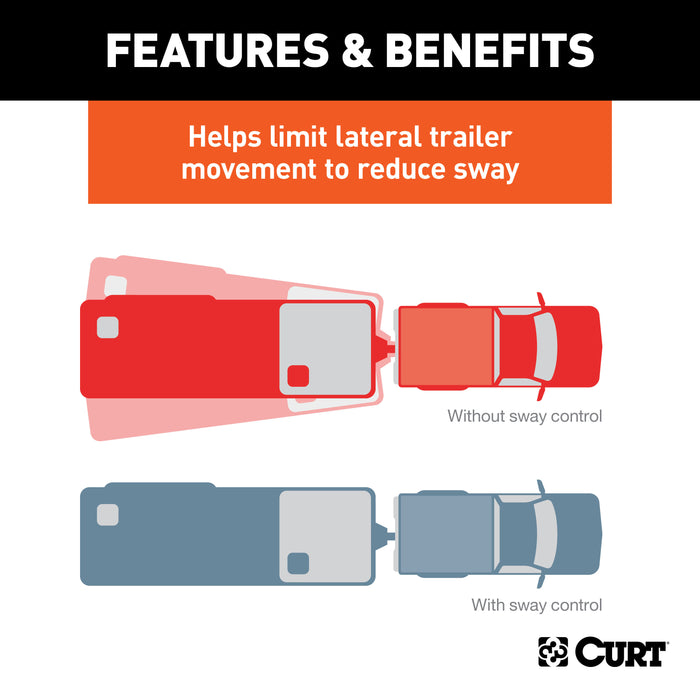
Weight distribution and sway control are two different functions, but they work best together. Many modern WD hitches include integrated sway control or are compatible with aftermarket sway control bars.
Sway control works by adding friction or active resistance to lateral trailer movement. In 2026, the best setups use multi-point sway control that monitors and counters sway at several connection points simultaneously.
There are three main sway control configurations to know:
-
Single-point friction sway control: A bar attached between the trailer A-frame and hitch head. Effective and affordable for lighter trailers.
-
Dual cam sway control: Built directly into the hitch head for a cleaner setup and easier hookup.
-
Multi-point active sway control: The most advanced option, using four or more contact points for maximum stability in challenging conditions.
If you frequently tow in windy conditions, on mountain roads, or with a wider trailer, investing in a hitch with integrated sway control is one of the smartest decisions you can make.
Our Top CURT Weight Distribution Hitch Picks for Every Budget
We carry a carefully selected range of CURT towing products that cover everything from light-duty towable trailers to serious heavy-haul applications. Here are three standout options to consider depending on your needs and budget.
Best for Mid-Range Towing: CURT 17062 Round Bar Weight Distribution Hitch with Sway Control (8-10K)
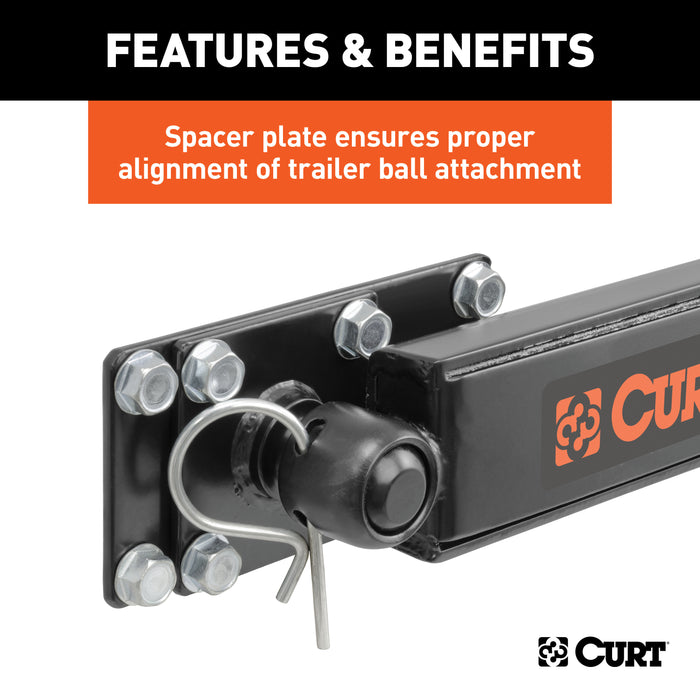
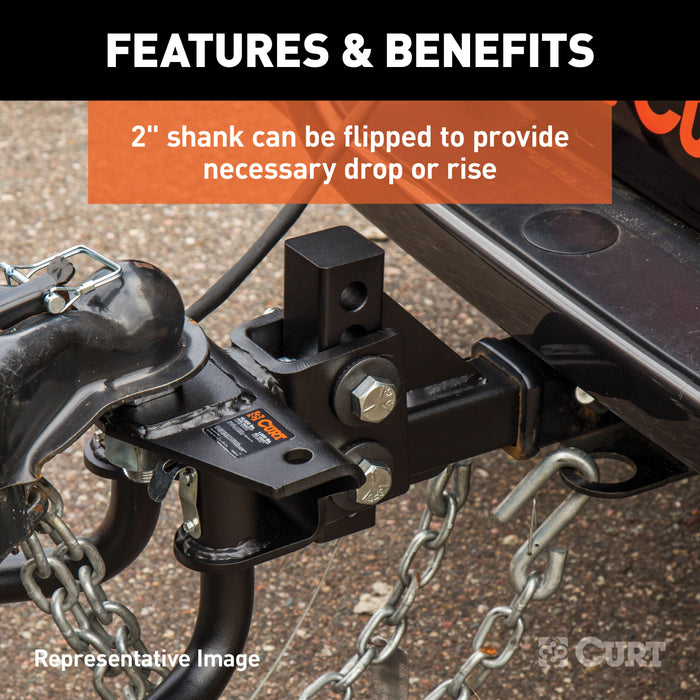
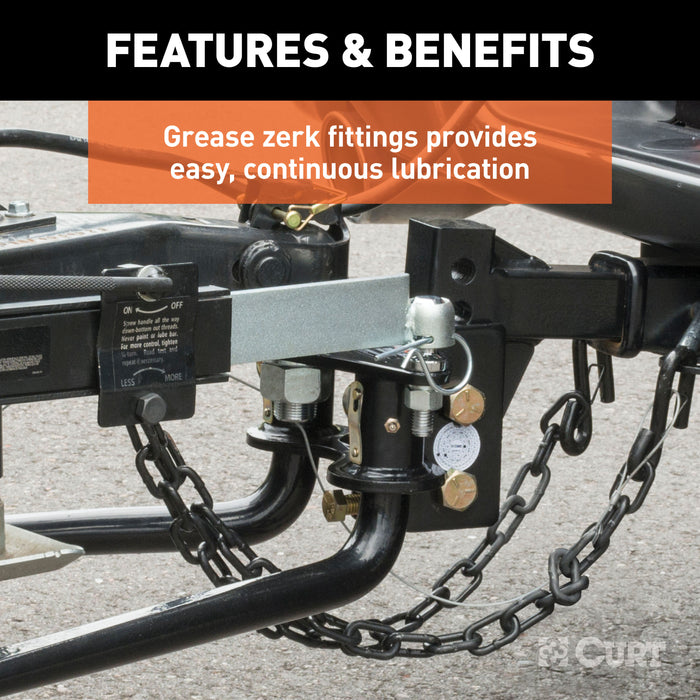
The CURT 17062 is a round bar WD hitch designed for trailers with a GTW of 8,000 to 10,000 lbs. It includes lubrication ports to reduce wear on the spring bars and an integrated sway control system.
This is a solid all-around choice for truck and SUV owners towing medium-sized travel trailers, toy haulers, and equipment trailers. The built-in sway control makes setup straightforward without the need for additional hardware.
Key specs: GTW rating 8,000-10,000 lbs, includes friction sway control, lubrication ports for long-term durability, compatible with 2" receivers.
Best for Heavy-Duty Towing: CURT 17422 Short Trunnion Bar Weight Distribution Hitch with Sway Control (10-15K)
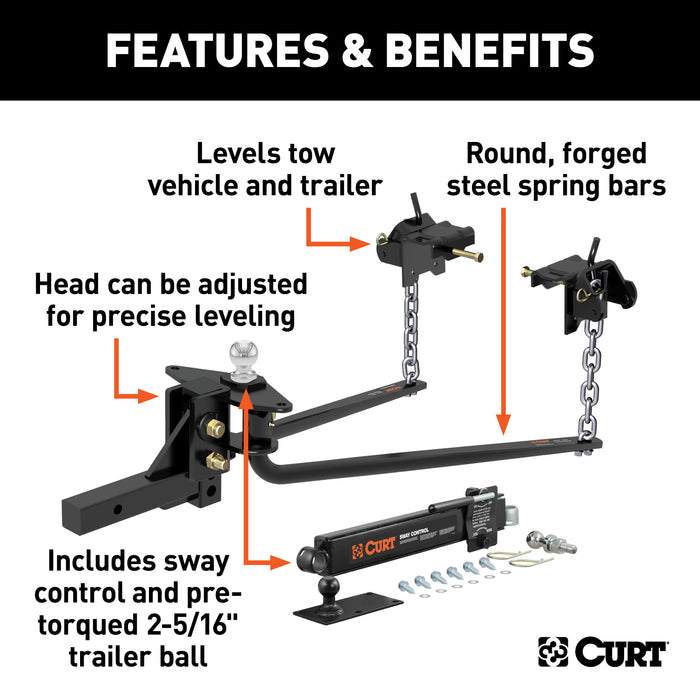
If you are towing heavier loads, the CURT 17422 Short Trunnion Bar WD Hitch steps up to a 10,000 to 15,000 lb GTW rating. It uses forged steel spring bars and a heavy-duty head for maximum rigidity under load.
The shorter trunnion design makes it easier to manage in tight quarters and reduces the risk of bottoming out on uneven terrain. At $641.12, it offers serious performance without jumping to the top-tier price range.
Key specs: GTW rating 10,000-15,000 lbs, short 28-3/8" trunnion bar design, forged steel spring bars, integrated sway control, available with 2-1/2" shank option.
Best for Maximum Sway Control: CURT 17499 TruTrack 4P Weight Distribution Hitch (5-8K)
The CURT 17499 TruTrack 4P is CURT's most advanced consumer-grade WD system, combining weight distribution with four independent sway control points. This is the hitch you choose when handling and stability are the top priorities.
The TruTrack 4P is built for trailers in the 5,000 to 8,000 lb GTW range where sway is particularly problematic, such as wide-body trailers or those carrying unbalanced loads. The four-point sway control system responds faster and more decisively than single or dual-point setups.
How to Find the Right Weight Distribution Hitch: Matching Hitch to Tow Vehicle
Finding the right WD hitch also means confirming compatibility with your specific tow vehicle. Your truck, SUV, or van has a rated maximum tongue weight, and your hitch needs to stay within that limit.
A few key compatibility checks to run before buying:
-
Receiver size: Most WD hitches require a 2" receiver. Some heavy-duty models use a 2-1/2" receiver. Confirm your vehicle's receiver size before ordering.
-
Rise or drop needed: The hitch head height must align with your trailer coupler height. Measure the distance between the receiver and the coupler ball when the trailer is level.
-
Vehicle tow rating: Never exceed your vehicle's published maximum tow rating or maximum tongue weight, even if the hitch itself is rated higher.
-
Wheelbase: Shorter-wheelbase vehicles (like compact pickups or midsize SUVs) may require a lower GTW-rated hitch than longer-wheelbase full-size trucks to maintain stability.
-
Air suspension: If your tow vehicle has factory air ride, consult the owner's manual. Some air suspension systems have specific WDH compatibility requirements.
When in doubt, reach out to us through our contact page and we can help confirm compatibility with your vehicle and trailer combination.
Did You Know?
Over 12,000 RV crashes every year are specifically attributed to towing mistakes like improper tongue weight and lack of sway control.
Source: allthingswithpurpose.com
Step-by-Step: How to Find the Right Weight Distribution Hitch for Your Specific Setup
To keep things practical, here is a clear process you can follow every time you are evaluating a new WD hitch purchase.
-
Weigh your loaded trailer: Use a certified truck scale or trailer weigh station to get your accurate GTW and tongue weight. Estimates are often off by hundreds of pounds.
-
Check your tow vehicle manual: Confirm the maximum GTW, tongue weight rating, and whether a WDH is required or recommended at your trailer's weight.
-
Choose your hitch type: Round bar for lighter loads and budget-conscious buyers. Trunnion bar for heavier loads, easier adjustment, and more frequent towing.
-
Decide on sway control: Standalone friction bar, integrated dual cam, or active multi-point system based on your trailer type and driving environment.
-
Verify receiver size and rise/drop: Measure your setup to confirm the hitch will sit at the correct height for a level tow.
-
Match GTW ratings: Buy a hitch rated at or above your maximum expected trailer weight. Do not buy one rated exactly at the limit with no headroom.
-
Install and adjust properly: Follow the manufacturer's setup guide carefully. A hitch that is incorrectly tensioned will not distribute weight effectively regardless of its quality.
Weight Distribution Hitch Maintenance: What You Need to Know in 2026
Nearly 70% of trailer users do not perform routine safety inspections before hitting the road, and the same neglect extends to WD hitches. A hitch that is not maintained can lose its effectiveness and become a hazard.
Here is what to check before every long tow:
-
Inspect spring bars for cracks, corrosion, or deformation.
-
Check all bolts and fasteners for proper torque.
-
Lubricate all friction points, including the ball, coupler, and spring bar sockets.
-
Verify the hitch head is seated and locked correctly.
-
Confirm the trailer sits level after hookup. If it does not, re-adjust spring bar tension.
Proper maintenance also protects your investment. Using a WD hitch correctly can reduce vehicle maintenance expenses by 15-20% by decreasing strain on rear suspensions over time.
How to Find the Right Weight Distribution Hitch: A Quick Comparison of the CURT Lineup
|
Model |
Type |
GTW Rating |
Sway Control |
Price |
Best For |
|---|---|---|---|---|---|
|
Round Bar |
8,000-10,000 lbs |
Friction (included) |
See store |
Mid-size travel trailers |
|
|
Short Trunnion Bar |
10,000-15,000 lbs |
Integrated sway control |
$641.12 |
Heavy fifth-wheels, large trailers |
|
|
TruTrack Active |
5,000-8,000 lbs |
4x Active sway control |
See store |
Wide-body trailers, high-wind routes |
Conclusion: The Right Weight Distribution Hitch Makes Every Tow Safer
Knowing how to find the right weight distribution hitch comes down to understanding your weights, your tow vehicle, your trailer type, and the driving conditions you encounter. There is no single universal answer, but there is always a right answer for your specific setup.
Whether you are pulling a mid-size travel trailer and need the reliability of a round bar system like the CURT 17062, handling serious heavy-haul work with the CURT 17422 trunnion bar, or dealing with persistent sway issues that call for the TruTrack 4P, we stock options that match the full range of towing needs.
Browse our complete selection of trailer weight distribution hitches and find the right setup for your truck, SUV, or van today. Safe towing starts with the right gear, and we are here to help you get it right.
Frequently Asked Questions
How do I know if I need a weight distribution hitch?
You need a weight distribution hitch when your trailer's tongue weight exceeds your tow vehicle's unassisted tongue weight limit or when you notice rear-end sag, headlights pointing upward, or loose steering after hookup. Most manufacturers recommend one when trailer GTW exceeds 50% of the tow vehicle's curb weight.
What size weight distribution hitch do I need for my trailer?
Match the hitch's GTW rating to your trailer's maximum loaded weight, with a little headroom above your actual trailer weight. For example, a 9,500 lb loaded trailer is best served by a hitch rated for 10,000 lbs rather than one rated exactly at 9,500 lbs.
Is a weight distribution hitch worth it in 2026?
Absolutely, especially as trailers continue to get larger and heavier. A properly matched weight distribution hitch restores steering feel, braking performance, and eliminates dangerous rear sag, all of which directly reduce your crash risk. The investment pays off in both safety and reduced wear on your vehicle.
Can I use a weight distribution hitch without sway control?
Technically yes, but it is not recommended for most setups. Weight distribution corrects vertical load imbalance, but it does not inherently prevent trailer sway, which is a lateral (side-to-side) problem. Using both together gives you full control over your trailer in all driving conditions.
What is the difference between a round bar and trunnion bar weight distribution hitch?
Round bar hitches use cylindrical spring bars that hook under the hitch head and are a popular, cost-effective choice for trailers up to about 12,000 lbs. Trunnion bar hitches use square bars that pivot inside the head, offering a more compact design, easier setup, and better performance under heavier loads above 10,000 lbs.
How much does a good weight distribution hitch cost?
Entry-level round bar systems typically start between $250 and $500 for the hitch itself, while mid-range trunnion setups with sway control run $500 to $800. Advanced active sway control systems can reach $2,400 or more, though most recreational towers find an excellent setup in the $500 to $700 range.
Do I need a special receiver hitch to use a weight distribution system?
Most weight distribution hitches require a standard 2-inch receiver, which is the most common size found on trucks and full-size SUVs. Some heavy-duty models use a 2-1/2-inch receiver, so confirm your vehicle's receiver size before ordering. Your receiver hitch itself must also be rated to handle the tongue weight you plan to distribute.